Spend Management
Department budgets that guide rather than block
A budget should be a steering wheel, not a brake. How to use department budgets to shape spending without grinding work to a halt.

Richmond Asare
Team Lead
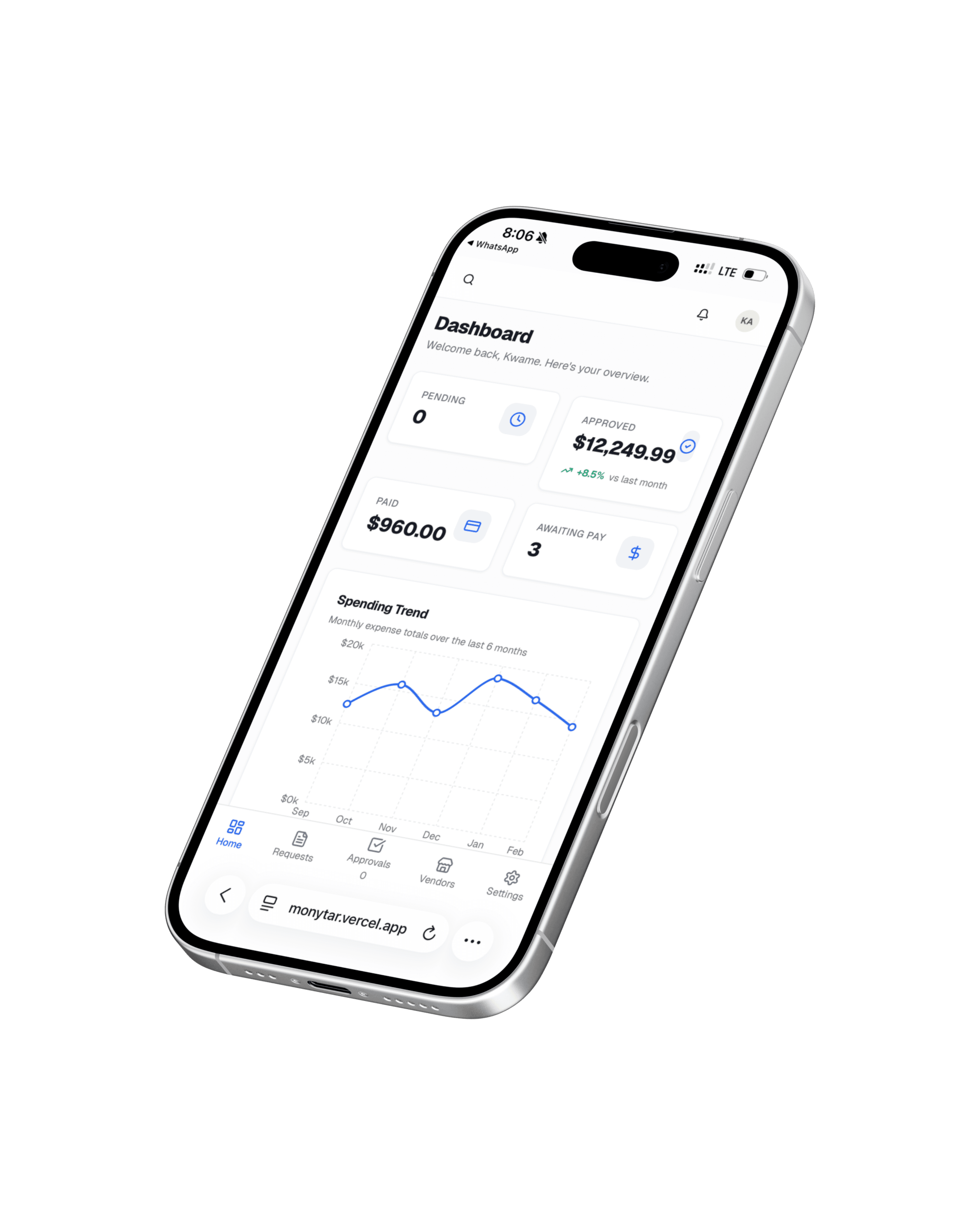
There are two ways to run a budget. One treats it as a hard wall: spend up to the line and everything stops. The other treats it as a guide: a clear signal of where you stand, with room for judgment at the edges. The first feels safe. The second is what actually works.
Visibility before enforcement
Most overspending is not reckless. It is invisible. A manager approves a string of reasonable requests with no clear sense of the cumulative total. By the time the budget is blown, the money is already gone. Showing the remaining budget at the moment of approval changes the decision while it can still be changed.
Use thresholds and alerts
- Send a gentle alert at 75 percent of budget so there is time to adjust.
- Flag requests that would push a department over its limit, but allow an override with a reason.
- Review the overrides monthly. They are often the most useful signal you have.
The goal of a budget is not to prevent every dollar of overspend. It is to make sure no overspend happens by accident.

Richmond Asare
Team Lead
Richmond leads product and strategy at Monytar. He writes about finance operations, spend culture, and building software that finance teams actually enjoy using.